Field notes & guides
Morse code, explained clearly
Practical reading on timing, listening, and real signals. Each guide connects the underlying idea to something you can hear or try.
 01
01Timing · 5 min read
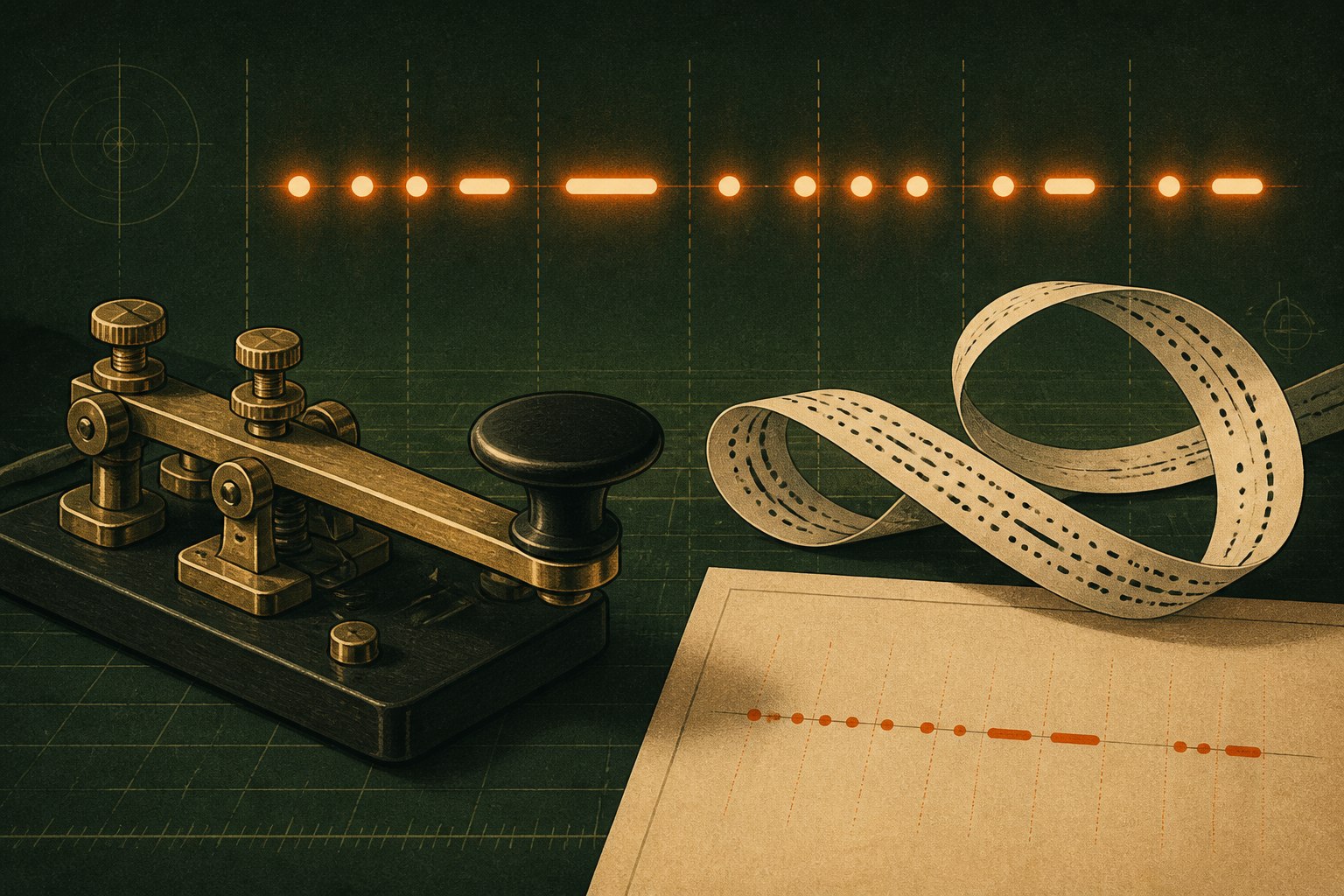
Morse Code Timing: The 1–3–7 Rule
A practical guide to dot, dash, character, and word spacing in International Morse code. 02
02Learning · 6 min read
Why Morse Code Is Easier to Learn by Sound
Move from counting dots and dashes to recognizing complete character rhythms. 03
03Practical guide · 4 min read
How to Send SOS With Light or Sound
The correct SOS rhythm, how to repeat it, and what the distress signal does—and does not—mean. 04
04Translator guide · 7 min read
How a Morse Code Translator Actually Works
What happens between text input, Morse output, timed audio, and automatic direction detection. 05
05History · 7 min read
International vs. American Morse Code
Why two Morse systems exist, how their rhythms differ, and which alphabet modern tools use. 06
06On the air · 8 min read
Morse Code on Amateur Radio: A First CW Contact
A plain-language tour of CQ calls, signal reports, Q-codes, and the rhythm of a basic CW contact. 07
07Reference · 7 min read
Morse Code Punctuation and Prosigns Explained
How punctuation differs from joined procedural signals such as AR, SK, BT, and SOS.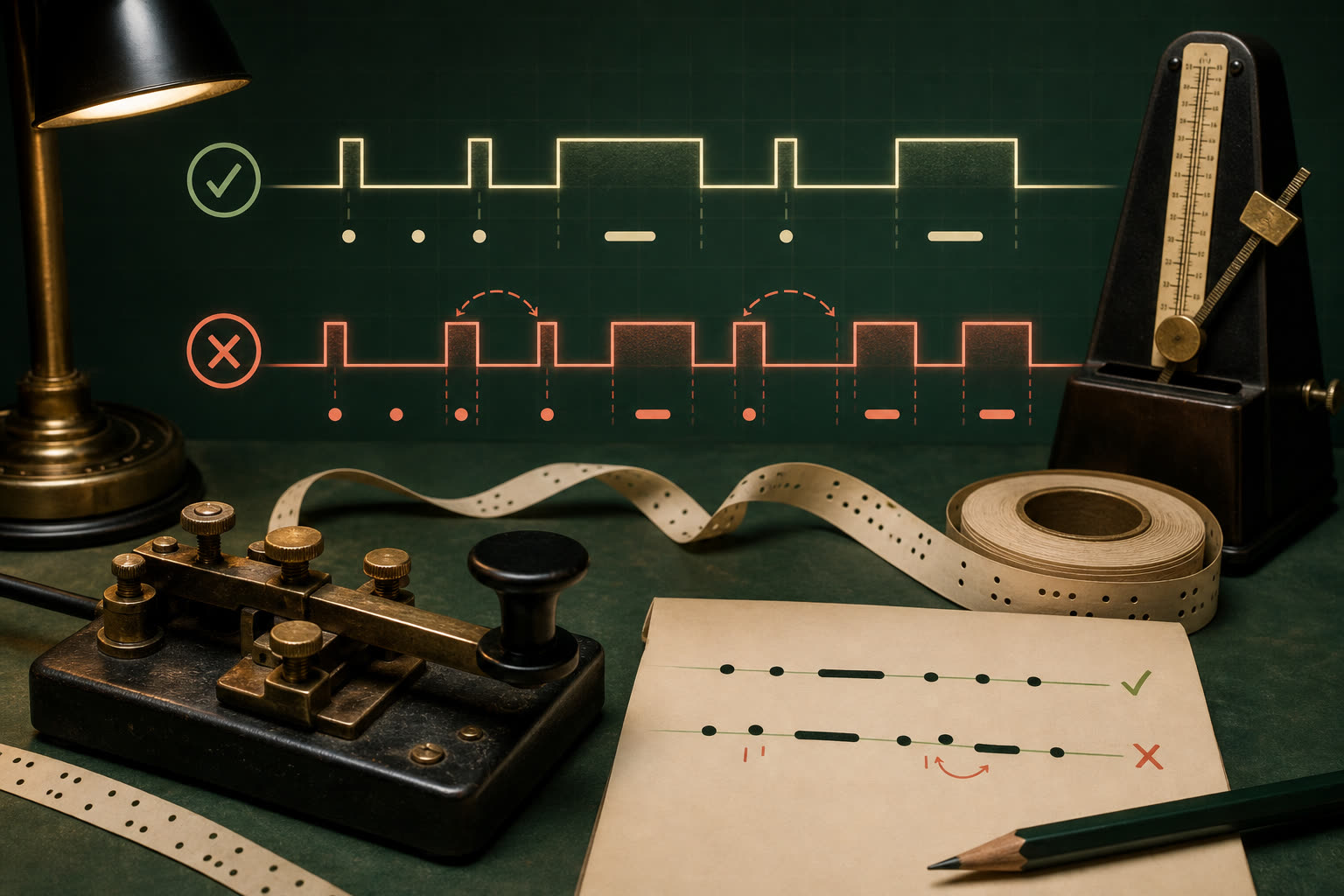 08
08Troubleshooting · 8 min read